12 Jyotirlingas: Complete List with Locations, Nearest Cities, What Makes Each Different, and How to Group Them Into Trips
Last verified: September 2026. Timings for each temple are covered in the individual guides linked below; those carry their own verification dates. Distances are road distances.
The twelve Jyotirlingas are the shrines where, by tradition, Shiva appeared as a column of light. They are spread from Gujarat’s coast to the Himalaya to the tip of Tamil Nadu, and completing all twelve is a pilgrimage many families spread across years. This page is the map: where each one is, the nearest city, what makes each different, and which ones fit together into a single trip. Each temple has its own guide on this site with timings, tickets and logistics.
The Twelve at a Glance
| # | Jyotirlinga | Location | Nearest airport / rail | Known for |
|---|---|---|---|---|
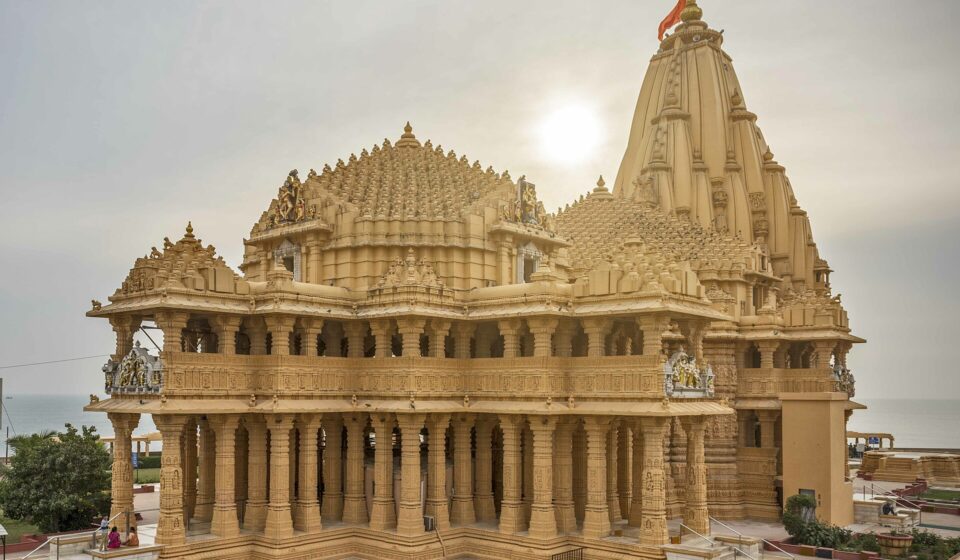
| 1 | Somnath | Prabhas Patan, Gujarat | Diu 85 km / Veraval 7 km | The first Jyotirlinga; rebuilt after repeated destruction; sea-facing |
| 2 | Mallikarjuna | Srisailam, Andhra Pradesh | Hyderabad 215 km / Markapur Road 85 km | Also a Shakti Peeth (Bhramaramba); Nallamala forest setting |
| 3 | Mahakaleshwar | Ujjain, Madhya Pradesh | Indore 55 km / Ujjain Jn 2 km | Bhasma Aarti at 4 AM; south-facing linga |
| 4 | Omkareshwar | Mandhata island, Madhya Pradesh | Indore 77 km / Omkareshwar Road 12 km | Om-shaped island in the Narmada; two shrines |
| 5 | Kedarnath | Rudraprayag, Uttarakhand | Dehradun 240 km / Rishikesh 210 km | 3,583 m; open May–October; 16 km trek |
| 6 | Bhimashankar | Pune district, Maharashtra | Pune 110 km | Sahyadri forest; Bhima river source |
| 7 | Kashi Vishwanath | Varanasi, Uttar Pradesh | Varanasi 25 km / Varanasi Jn 4 km | The corridor to the Ganga; five daily aartis |
| 8 | Trimbakeshwar | Nashik, Maharashtra | Nashik 50 km / Nashik Road 36 km | Three-faced linga; Godavari source; Kaal Sarp pujas |
| 9 | Vaidyanath (Baidyanath) | Deoghar, Jharkhand | Deoghar 15 km / Jasidih 7 km | Shravan Kanwar Yatra from Sultanganj |
| 10 | Nageshwar | Near Dwarka, Gujarat | Jamnagar 130 km / Dwarka 17 km | Giant Shiva statue; paired with Dwarkadhish |
| 11 | Rameshwaram | Rameswaram island, Tamil Nadu | Madurai 170 km / Rameswaram 2 km | Also a Char Dham; 22 wells; longest corridor |
| 12 | Grishneshwar | Verul (Ellora), Maharashtra | Aurangabad 30 km | Beside the Ellora caves; the last of the twelve |
Guides on This Site
- Somnath Temple Timings — aarti schedule, light and sound show, rules
- Mahakaleshwar Bhasma Aarti — booking, ₹200 ticket, dress code
- Omkareshwar — timings, Mamleshwar, the island parikrama
- Kedarnath Temple Timings and the Kedarnath Yatra Guide — registration, route, costs
- Kashi Vishwanath — aartis, Sugam Darshan, Mangala Aarti booking
- Trimbakeshwar — timings, ₹200 pass, puja costs
- Nageshwar — covered in the Somnath to Dwarka road trip and the Dwarkadhish guide
- Rameshwaram — timings, 22 Theerthams, Dhanushkodi
Guides for Mallikarjuna, Bhimashankar, Vaidyanath and Grishneshwar are in preparation.
Which Ones Go Together
Most pilgrims do the twelve in clusters. These are the pairings that work on the ground:
Gujarat coast (2–3 days): Somnath and Nageshwar, with Dwarka’s Dwarkadhish between them. Ahmedabad → Somnath → Porbandar → Dwarka → Nageshwar. See the Somnath to Dwarka road trip.
Madhya Pradesh (2 days): Mahakaleshwar and Omkareshwar, 140 km apart. Fly into Indore. Bhasma Aarti at Ujjain on day one, Omkareshwar on day two.
Maharashtra (3–4 days): Trimbakeshwar, Bhimashankar and Grishneshwar. Nashik → Pune → Aurangabad, roughly 500 km total; Grishneshwar is beside Ellora, so add the caves. Shirdi sits between Nashik and Aurangabad and most people add it.
Uttar Pradesh–Jharkhand (3 days): Kashi Vishwanath and Vaidyanath, connected by train (Varanasi to Jasidih, about 6 hours).
South (3–4 days): Mallikarjuna and Rameshwaram are far apart (900 km); usually done as separate trips — Srisailam from Hyderabad, Rameshwaram from Madurai with Meenakshi and Kanyakumari.
Himalaya (4–6 days): Kedarnath stands alone; it’s a trek and a season (May–October), usually combined with Badrinath as part of the Char Dham.
Doing All Twelve
The full circuit is about 6,500 km. Done as six separate trips it takes most families two to three years; done continuously by road it’s three to four weeks. Two constraints decide the order: Kedarnath is only open May to October, and the monsoon (July–September) makes the Maharashtra and Madhya Pradesh temples crowded with Shravan pilgrims and the Kedarnath trek hazardous. The comfortable pattern is Gujarat, Madhya Pradesh and the south in winter, Maharashtra in October or February, Kashi and Vaidyanath in winter, and Kedarnath in May–June or September–October.
Rules That Apply Almost Everywhere
- No phones or cameras inside any of the sanctums; lockers at the gates.
- Traditional dress is required for special darshans and sevas at Mahakaleshwar, Kashi, Trimbakeshwar and Rameshwaram, and expected everywhere.
- Every temple with a paid darshan sells it only through its own trust; third-party “VIP booking” sites are resellers.
- Mondays, Shravan and Mahashivratri multiply queues by four to ten.
Frequently Asked Questions
How many Jyotirlingas are there?
Twelve, listed in the Shiva Purana.
Which is the first Jyotirlinga?
Somnath in Gujarat is traditionally listed first.
Which Jyotirlinga is highest?
Kedarnath, at about 3,583 metres.
Which Jyotirlinga is also a Char Dham?
Rameshwaram.
Can all twelve be done in one trip?
Yes, in three to four weeks by road, but Kedarnath restricts the season to May–October.
Which two are closest together?
Mahakaleshwar and Omkareshwar, 140 km apart.
Which Jyotirlinga is in the south?
Rameshwaram in Tamil Nadu and Mallikarjuna in Andhra Pradesh.
Compiled from this site’s verified temple guides, September 2026. Spotted a change? Email info@themandiryatra.com.
Editor at The Mandir Yatra. Covers the Himalayan and northern yatras (Kedarnath, Vaishno Devi, Govardhan, Narmada Parikrama) and the southern and eastern temples (Tirupati, Kanyakumari, Srikalahasti, Draksharamam, Jagannath Puri, Kamakhya). Every guide is checked against the temple trust’s official schedule before publishing and carries a last-verified date.