Trimbakeshwar Temple Timings 2026: Darshan Hours, ₹200 Pass, Kaal Sarp and Narayan Nagbali Puja Costs, and Kumbh 2027
Last verified: September 2026. Temple timings are set by the Trimbakeshwar Devasthan Trust; puja charges are set by individual priests, not the trust, and vary widely — the ranges below are what devotees actually report paying. Confirm the day’s schedule at the temple office, and treat 2027 as a special year: the Nashik–Trimbakeshwar Simhastha Kumbh will change everything about crowds and access.
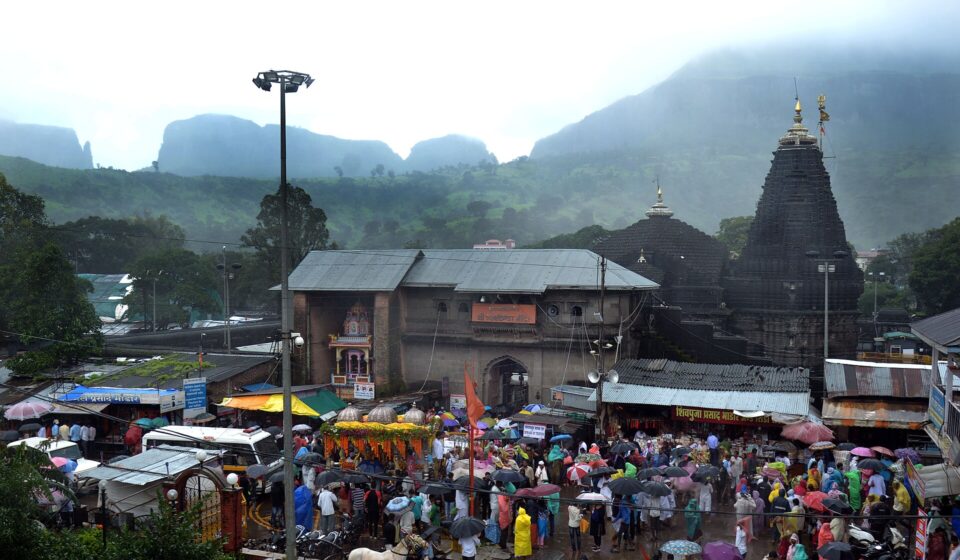
Trimbakeshwar is the Jyotirlinga with three faces — Brahma, Vishnu and Shiva in one linga — at the source of the Godavari, 28 km from Nashik. Most pilgrims come for darshan; a large share come for something else entirely: the remedial pujas that only a handful of temples in India are considered right for. Kaal Sarp Shanti, Narayan Nagbali and Tripindi Shraddha are performed here every day of the year, and the pricing around them is the most opaque thing about the town. This guide covers the timings, the ₹200 donation darshan, and how the puja economy actually works so you’re not quoted ₹40,000 for a ₹8,000 ritual.
Trimbakeshwar Temple Timings
| Event | Time |
|---|---|
| Temple opens | 5:30 AM |
| Rudrabhishek (morning) | Around 7:00 AM – 8:30 AM |
| Donation (“VIP”) darshan | From 5:00 AM on the paid line |
| Darshan continues | Through the day; no midday closure |
| Evening aarti | Around 7:00 – 7:30 PM |
| Temple closes | 9:00 PM |
Monday special: every Monday at about 4:30 PM the deity’s gold crown (Panchmukhi Mukut, attributed to the Peshwa era) is carried in a palanquin from the temple to Kushavarta Kund and back. It’s the one weekly event worth timing a visit around; the crown is otherwise not on display.
Darshan Options
| Option | Cost | Wait | Notes |
|---|---|---|---|
| General darshan | Free | 30–60 minutes weekdays; 2–4 hours weekends; 6–8 hours on Shravan Mondays and Mahashivratri | Queue starts at the main gate |
| Donation darshan pass | ₹200 per person | 30–45 minutes | Booked at the counter or on the trust’s official website; separate entrance; paid line opens at 5 AM |
| Sanctum entry (garbhagriha) | Free but restricted | — | Men only, in a silk dhoti (sovale), for a short window in the early morning; not available on crowded days. Women view from the hall. |
| Rudrabhishek at the temple | ₹1,500 upwards through trust-registered priests | — | Book at the temple office |
No phones, cameras, bags or leather inside. Free lockers at the entrance. Modest dress; for any puja, men wear a white dhoti and uparne (shawl), sold outside for ₹100–₹200.
The Pujas: What They Cost and How Not to Be Cheated
Three rituals are the reason Trimbak has several hundred resident priests:
| Puja | Purpose | Duration | Realistic cost (2026) |
|---|---|---|---|
| Kaal Sarp Shanti | Rahu–Ketu affliction in the horoscope | 3–4 hours, one morning | ₹2,500 – ₹8,000 |
| Narayan Nagbali | Ancestral unrest, family misfortune | Three days | ₹8,000 – ₹15,000 |
| Tripindi Shraddha | Peace for departed family members | One day | ₹3,000 – ₹8,000 |
| Maha Mrityunjaya Jaap | Health, longevity | One day | ₹5,000 – ₹15,000 depending on count |
The wide ranges are the point: the same ritual is quoted at ₹6,000 and ₹60,000 to different people. What decides the price is the number of priests, the samagri (materials) package, whether accommodation is bundled, and how the devotee found the priest.
How to do it properly:
- The pujas are performed by Tamrapatradhari priests — families holding a copper-plate (tamrapatra) right granted under the Peshwas. Ask any priest to show the tamrapatra. The Purohit Sangh office in Trimbak can confirm registration.
- Book directly with a priest by phone a week ahead. Agree the total, what’s included (samagri, hall, meals, stay), and the date — Narayan Nagbali is not performed on certain tithis and needs a specific muhurat.
- Do not book through hotel touts, “Trimbakeshwar booking” websites, or anyone who approaches you at the bus stand. The temple trust does not sell puja bookings online; every site claiming to is an intermediary adding 50–300%.
- Kaal Sarp and Tripindi are done at the priest’s own puja hall or at Kushavarta, not inside the temple. Narayan Nagbali is performed at the Ahilya–Godavari sangam on the edge of town.
- Fasting and abstaining from certain foods the night before is standard; the priest will tell you.
Kushavarta Kund and Around
- Kushavarta Kund — the tank two minutes from the temple where the Godavari is said to emerge. A dip here before darshan is the tradition; it’s also where the Monday crown procession ends.
- Brahmagiri Hill — the actual source of the Godavari, 750 steps or a 3.5 km climb; 1.5–2 hours up, closed in heavy monsoon.
- Gangadwar and Anjaneri — Anjaneri (7 km) is held to be Hanuman’s birthplace; a 4 km trek.
- Nivrittinath Samadhi — the samadhi of Jnaneshwar’s elder brother, in town; the Nivrittinath Yatra in January draws lakhs of Varkaris.
- Nashik (28 km) — Panchavati, Ramkund, Kalaram Temple, Sula vineyards; most people stay there.
Kumbh Mela 2027
The Nashik–Trimbakeshwar Simhastha Kumbh Mela runs from July 2027 to around September 2028, with the main Shahi Snans at Kushavarta in August–September 2027. Expect road closures, permit-only vehicle entry, and darshan waits measured in hours for months either side. If you want a normal Trimbakeshwar visit, do it before June 2027 or after the mela.
How to Reach
- Air: Nashik (Ozar) Airport, 50 km; Mumbai 200 km; Pune 220 km.
- Rail: Nashik Road station, 36 km; direct trains from Mumbai (3 hours), Pune, Delhi, Bhopal.
- Road: Nashik CBS bus stand to Trimbak every 20–30 minutes (1 hour, MSRTC); taxis about ₹1,000–₹1,500 one way. Mumbai 4–5 hours by road via the Nashik highway; Shirdi 105 km.
Where to Stay
Trimbak town has dharamshalas and basic lodges within walking distance, and priests often bundle a room for multi-day pujas. Nashik has every class of hotel and is the usual base for a day trip. For Shravan, Mahashivratri and the Nivrittinath Yatra, book weeks ahead.
Best Time to Visit
October to February. Monsoon (July–September) is green and dramatic but Brahmagiri is unsafe and Shravan brings the year’s heaviest crowds. Mahashivratri (February/March) and every Shravan Monday are the peaks; Tripuri Purnima (November) has a lamp festival at Kushavarta.
Frequently Asked Questions
What are Trimbakeshwar temple timings?
5:30 AM to 9:00 PM daily, with no midday closure. The paid darshan line opens at 5 AM.
How much is VIP darshan?
₹200 per person for the donation darshan pass.
How much does Kaal Sarp puja cost?
₹2,500–₹8,000 from a registered priest. Quotes of ₹15,000+ are intermediary pricing.
Can I book the pujas on the temple website?
No. The trust sells darshan passes, not pujas. Pujas are booked directly with Tamrapatradhari priests.
Can women enter the sanctum?
No. Sanctum entry is for men in a silk dhoti during a short morning window; everyone else has darshan from the hall.
When is the Monday crown darshan?
About 4:30 PM every Monday, in procession to Kushavarta Kund.
When is the Nashik Kumbh?
July 2027 to around September 2028, with the main bathing dates in August–September 2027.
Verified against the Trimbakeshwar Devasthan Trust’s published hours and current devotee reports, September 2026. Spotted a change? Email info@themandiryatra.com.
Editor at The Mandir Yatra. Covers the Himalayan and northern yatras (Kedarnath, Vaishno Devi, Govardhan, Narmada Parikrama) and the southern and eastern temples (Tirupati, Kanyakumari, Srikalahasti, Draksharamam, Jagannath Puri, Kamakhya). Every guide is checked against the temple trust’s official schedule before publishing and carries a last-verified date.