Somnath Temple Timings 2026: Aarti Schedule, Darshan Rules & Complete Visitor Guide
Last verified: September 2026. Timings can change on festival days — always confirm on the Somnath Trust’s official website before you travel.
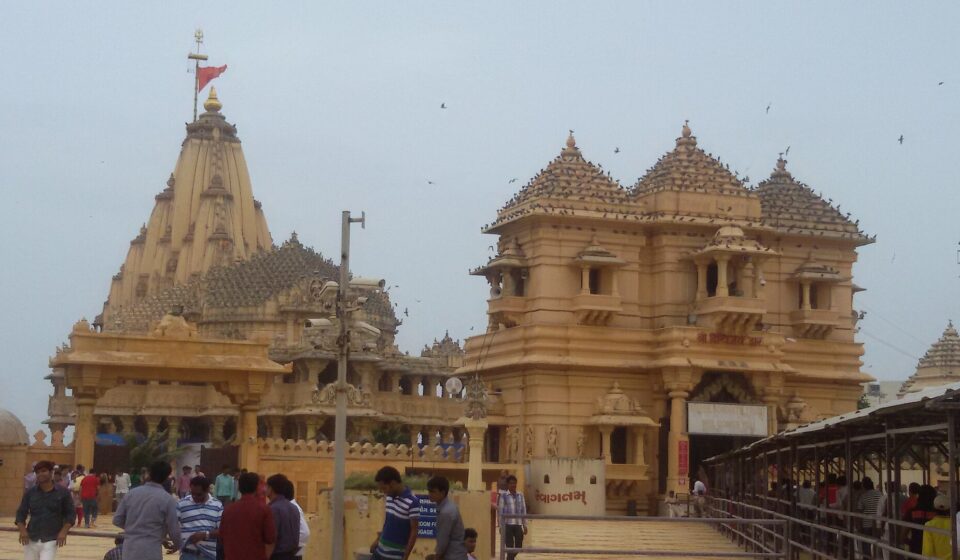
Somnath sits at the very edge of Gujarat’s Saurashtra coast, where the Hiran, Kapila and the mythical Saraswati rivers meet the Arabian Sea. It is the first of the twelve Jyotirlingas, and 2026 is a landmark year for it: the temple marked 1,000 years since the first invasion of 1026 and 75 years since its reopening in May 1951. If you have been meaning to visit, this is the year people will remember.
This guide covers everything you need to plan the trip properly: exact timings, what happens at each aarti, the rules inside, how to reach, where to stay, and what to combine it with.
Somnath Temple Timings at a Glance
| Event | Time |
|---|---|
| Temple opens | 6:00 AM |
| Temple closes | 10:00 PM |
| Morning aarti | 7:00 AM |
| Afternoon (Madhyahna) aarti | 12:00 PM |
| Evening (Sandhya) aarti | 7:00 PM |
| Light & Sound show “Jay Somnath” | Around 8:00 PM, approx. 1 hour |
| Entry fee | Free |
Darshan is open continuously from 6 AM to 10 PM. Unlike many large temples, there is no long midday closure — you can walk in at 2 PM and still get darshan. The three aartis are the exception: during each aarti the queue slows because everyone stops to watch, so if you want a quick darshan, avoid arriving in the 15 minutes before an aarti starts.
What Happens at Each Aarti
Morning aarti (7 AM) is the calmest. Most day-trippers from Rajkot and Ahmedabad haven’t arrived yet, and the light coming off the sea behind the shikhar is the best you will get all day. If you are staying overnight, this is the one to attend.
Afternoon aarti (12 PM) is the shortest and least crowded of the three. It is a good option if you arrive by a morning train and want to finish darshan before lunch.
Evening aarti (7 PM) is the most crowded, for good reason — it coincides with sunset over the Arabian Sea. The sabha mandap fills up 20–30 minutes before. Arrive by 6:30 PM if you want to stand inside; otherwise you can watch from the courtyard, which is honestly a better view of the sea.
The Light & Sound Show
“Jay Somnath” runs on the temple lawns after the evening aarti, usually starting around 8 PM and lasting roughly an hour. It narrates the temple’s history — the repeated destruction and rebuilding — with the illuminated temple as the backdrop. Tickets are sold at the counter near the show area for a small fee. It is cancelled in heavy rain, so during monsoon check at the temple office before waiting around.
Practical tip: attend the 7 PM aarti, walk out to the sea-facing promenade for 20 minutes, then take your seat for the show. The three together make one evening, and it is the evening everyone remembers.
Darshan Rules and What to Carry
- No mobile phones, cameras, bags or electronic items are allowed inside the temple complex. Free locker counters are located near the entrance gate. Keep only your wallet and a small pouch.
- Dress code: there is no enforced uniform, but shoulders and knees should be covered. Traditional wear is common but not required.
- Footwear is removed at the shoe stand outside the security check.
- Security check is airport-style and can add 10–15 minutes at peak times.
- Prasad is available from the counter inside the complex.
- Wheelchairs are available at the entrance on request.
Special Poojas and Abhishek
The Somnath Trust conducts Rudrabhishek, Laghurudra and other poojas on behalf of devotees. These are booked at the trust office inside the complex or through the official website. If you want to be present for a pooja rather than just sponsor it, book at least a few days ahead — slots on Mondays and during Shravan fill fast.
How to Reach Somnath
By air
- Diu Airport — about 85 km, limited flights
- Rajkot Airport — about 195 km, the most practical option with regular flights from Mumbai and Delhi
- Ahmedabad Airport — about 410 km
By train
- Somnath station (about 1 km from the temple) and Veraval Junction (about 7 km) both serve the town. Veraval has more trains, including direct services from Ahmedabad, Rajkot, Mumbai and Pune. Autos and taxis are available outside both stations.
By road
- Ahmedabad → Somnath: approx. 410 km, 7–8 hours
- Rajkot → Somnath: approx. 195 km, 4 hours
- Dwarka → Somnath: approx. 235 km, 5 hours
- GSRTC buses run from all major Gujarat cities. Private Volvo sleeper buses from Ahmedabad are the most common choice for overnight travel.
If you are planning the Dwarka–Somnath circuit, read our Somnath to Dwarka road trip itinerary.
Where to Stay
Somnath Trust guest houses are the best value and the closest to the temple. Lilavati Bhavan, Maheshwari Bhavan and Sagar Darshan are the main ones; rooms are basic, clean and walkable to the temple. Book through the trust’s official website — they fill up weeks ahead for Shravan and Mahashivratri.
Private hotels cluster on the main road between the temple and Veraval. Expect budget to mid-range options; there is very little at the luxury end. Veraval town, 7 km away, has more choice if Somnath is full.
Best Time to Visit
October to March is the comfortable season — cool sea breeze, clear skies, ideal for the evening aarti and show.
April to June is hot and humid. Visit early morning and stay indoors midday.
July to September (monsoon) is surprisingly pleasant because of the sea, but the light and sound show is often cancelled and the beach is rough.
Festival dates to plan around (or avoid, depending on your tolerance for crowds):
- Mahashivratri (February/March) — the biggest day of the year; the temple is open through the night
- Shravan month (July/August) — every Monday is heavily crowded
- Kartik Purnima (November) — the Somnath fair, five days of crowds and celebration
Nearby Places Worth Combining
Most people give Somnath half a day. It deserves a full one.
- Triveni Sangam (1 km) — the confluence of the three rivers and the sea. Go at sunrise.
- Bhalka Tirth (5 km) — where Lord Krishna is believed to have been struck by a hunter’s arrow before leaving his mortal body.
- Gita Mandir and Dehotsarg (near Triveni) — connected to Krishna’s final moments; quiet and rarely crowded.
- Somnath Beach — a short walk from the temple, best for an early morning walk. Swimming is not safe.
- Prabhas Patan Museum — small but has fragments from the older temple structures.
- Gir National Park (about 45 km) — if you have an extra day, the lion safari is a completely different experience to pair with the temple.
A One-Day Plan That Works
- 6:30 AM — Triveni Sangam at sunrise
- 7:00 AM — Morning aarti at the temple
- 9:00 AM — Breakfast, then Bhalka Tirth and Gita Mandir
- 12:00 PM — Return for afternoon aarti or rest at the guest house
- 4:00 PM — Prabhas Patan Museum, then walk the promenade
- 6:30 PM — Enter for evening aarti
- 8:00 PM — Light & sound show
- 9:30 PM — Dinner near the temple
Frequently Asked Questions
No enforced uniform, but dress modestly — shoulders and knees covered.
No. Phones, cameras and bags must go in the free lockers at the entrance.
No, darshan is free. The light and sound show has a small ticket.
Outside aarti times, 20–40 minutes including security. During Shravan Mondays or Mahashivratri, plan for 2–3 hours.
Yes, from 6 AM to 10 PM without a midday closure.
Diu is closest by distance (about 85 km), but Rajkot (about 195 km) has far better flight connections.
Yes. They are about 235 km apart. Two to four days covers both comfortably — see our Somnath to Dwarka road trip itinerary.
This guide is based on the Somnath Trust’s published schedule and recent pilgrim reports. If you spot something that has changed, write to us at info@themandiryatra.com and we will update it.
Writer at The Mandir Yatra. Covers the Gujarat and Rajasthan circuit — Somnath, Dwarka, Ambaji, Pushkar, Nathdwara — plus Banke Bihari in Vrindavan and Yadagirigutta. Guides are verified against official trust information and carry a last-verified date.